Lebanese Ministry of Information
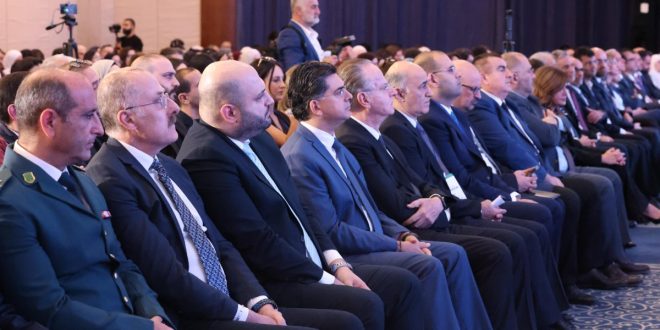
Public Health Minister, Dr. Rakan Nassereddine, representing the President of the Republic, inaugurated today the 27th Pharmaceutical Conference, organized by the Order of Pharmacists of Lebanon under the theme “Transforming Healthcare Through Pharmaceutical Excellence,” held at the Le Royal Hotel in Dbayeh.
The opening ceremony was attended by MP Bilal Abdallah, representing the Speaker of the Parliament and serving as Chair of the Parliamentary Health Committee; Information Minister, Attorney Dr. Paul Morcos, representing the Prime Minister; MP George Adwan, Chair of the Administration and Justice Committee; as well as representatives from security agencies, former heads of the Order, university deans and directors, the head of the Order of Pharmacists, Dr. Abdul Rahman Markabawi, and members of the Order’s council, alongside a large number of pharmacists and physicians.
Addressing the attendees, the Health Minister outlined the major challenges facing the health sector and the solutions the Ministry is working to develop.
He indicated that collaboration began with the previous syndicate and is continuing, adding, “We have decided to turn a new page and move forward in step with all the changes. There are many outstanding issues that will be addressed in coordination with the Ministry. Furthermore, we intend to strengthen the syndicate through scientific committees; we have appointed 14 specialists from various university faculties of pharmacy to serve on these committees. They will play a role in establishing operational mechanisms, in cooperation with the World Health Organization.”
He added: “Next week, we will launch an application for monitoring all pharmaceutical products. If a citizen is unable to use a particular medication, they can register its name via the app. Any negative report regarding a drug will be treated as a formal notification to the Ministry, which will then take appropriate action, ranging from the removal of the product from the market to other necessary measures.”
Referring to the National Drug Body, Nassereddine said it represents an achievement by the Parliament; however, it has yet to become operational, as the necessary implementing decrees to facilitate its work still need endorsement. He added that they have submitted a request to the Civil Service Board, noting that without the proper executive mechanisms, it remains ineffective.
“As for reforms, pharmacists play a significant role, both in times of peace and war, but we cannot hold the pharmacist responsible for fixing prices; at the same time, we must take the people’s situation into account,” Nassereddine added.
“Regarding biosimilar drugs, there is no issue provided the quality is high, and as long as we examine them in coordination with all relevant authorities, establish clear regulatory standards, train pharmacists, and successfully achieve cost savings,” he said.
“We will show zero tolerance toward any individual, company, or institution that compromises the health of the Lebanese people, especially if we encounter smuggled or counterfeit medication,” Nassereddine underscored, adding, “In such cases, we will initiate legal action.”
“I would like to thank the Council of Ministers for approving the proposal we submitted on this matter,” he said.
“We have taken a bold decision, and we will do whatever is necessary to safeguard the health of the Lebanese people; we will not allow it to be put at risk by any party whatsoever,” Nassereddine pledged.